Google launches Carbon, an experimental replacement for the C++ programming language
Frustrated by the slow evolution of C++, Google engineers launched a new "experimental" open source programming language called Carbon as a possible successor to the outdated C++.
Just as Microsoft created TypeScript to update JavaScript, and Kotlin was created to address Java's shortcomings, Carbon could be the successor to C++, a language that offers developers an easy transition to a new language that meets modern development concepts such as memory security.
C++ has long been the language of choice for building performance-critical applications. C++ has a number of problems that hinder modern developers. It gathered decades of technical problems, bringing with it many obsolete practices that were part of the language of its predecessors. C++ users are prioritizing backward compatibility to continue supporting widely used projects like Linux and its package management ecosystem
Although Carbon started as an internal Google project, the development team wants to reduce contributions from Google or other individual companies to less than 50% by the end of the year. Eventually, they want to hand over the project to an independent software foundation, where the development will be managed by volunteers.
Another important feature that C++ lacks is memory security. Memory access errors are one of the biggest security causes. Carbon developers will look for ways to better track uninitialized states, develop APIs and idioms that support dynamic boundary checking, and create a comprehensive default debug build mode. Finally, the designers plan to create a safe Carbon part.
According to the documentation, Carbon will support:
- Software is essential for productivity;
- The evolution of software and languages;
- Code that is easy to read, understand and write;
- Practical safety and inspection mechanisms;
- Rapid and scalable development;
- Modern OS platform, hardware architecture and environment;
- Interaction with existing C++ code and migration from it;
- The development team will also build a built-in package manager, something that is severely lacking in C++.
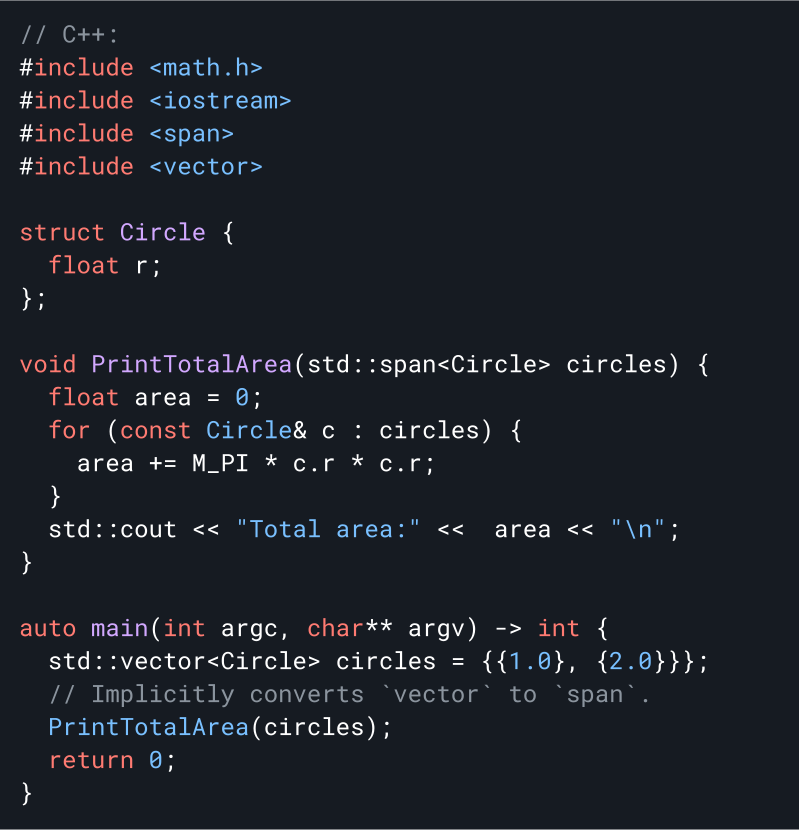
Here are some of the C++ code that translates to Carbon. First, the C++ code: https://mezha.media/wp-content/uploads/2022/07/50657eb5-cpp_snippet.svg
Here is the same function written in Carbon:
That's all the information you can us Give, if this kind of information is useful, don't forget to continue to follow us, to get the latest information about the world of technology and other interesting things.




 Have any question?